







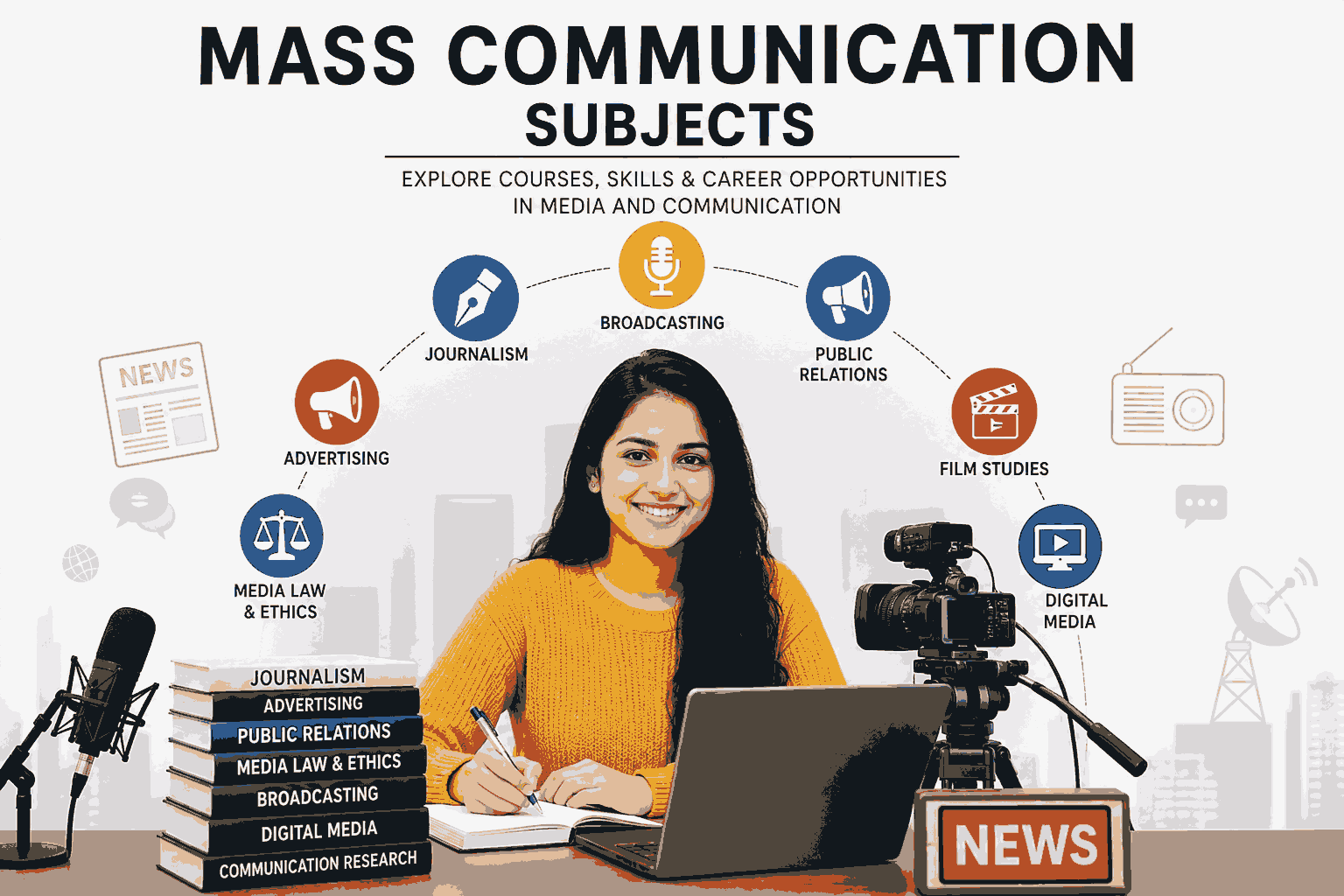
Mass communication subjects form the foundation of one of the most dynamic and influential fields in modern education. In today’s digital age, information travels across the globe within seconds through television, radio, newspapers, websites, social media platforms, podcasts, and mobile applications. Behind every news report, advertising campaign, documentary, public relations strategy, and digital content piece are professionals trained in various mass communication subjects.
Students interested in media, journalism, broadcasting, advertising, public relations, filmmaking, and digital communication often choose mass communication because it offers diverse career opportunities and practical skills. Understanding mass communication subjects is essential for anyone planning to pursue a degree or career in media and communication industries.
This comprehensive guide explores the major mass communication subjects, their importance, course structure, skills developed, career opportunities, and future prospects in the communication industry.
What Is Mass Communication?
Mass communication refers to the process of creating, sending, receiving, and analyzing messages delivered to large audiences through various media channels. These channels include newspapers, magazines, television, radio, websites, social media platforms, podcasts, and streaming services.
The study of mass communication subjects prepares students to communicate effectively with large groups of people while understanding audience behavior, media ethics, content creation, and communication technologies.
Modern mass communication has evolved significantly due to technological advancements. Today’s professionals are expected to work across multiple platforms, making mass communication subjects more relevant than ever before.
Core Mass Communication Subjects Every Student Studies
The curriculum varies between universities, but most institutions include several essential mass communication subjects.
Journalism
Journalism is one of the most important mass communication subjects. It focuses on gathering, verifying, writing, and presenting news to the public.
Students learn:
- News writing
- Investigative reporting
- Interview techniques
- Feature writing
- Editorial writing
- News ethics
- Fact-checking
Journalism helps students understand how information is collected and distributed responsibly.
Skills Developed
- Critical thinking
- Research abilities
- Writing proficiency
- Ethical decision-making
- Interviewing skills
Public Relations
Public Relations (PR) is another major component among mass communication subjects. It focuses on managing communication between organizations and the public.
Students study:
- Corporate communication
- Crisis management
- Reputation management
- Media relations
- Press release writing
- Event communication
Public relations professionals help organizations maintain positive relationships with stakeholders.
Career Opportunities
- Public Relations Officer
- Corporate Communications Specialist
- Media Relations Manager
- Brand Communication Executive
Advertising
Advertising is one of the most creative mass communication subjects. It teaches students how brands communicate with consumers through persuasive messages.
Topics include:
- Consumer behavior
- Advertising strategies
- Campaign planning
- Creative copywriting
- Brand management
- Digital advertising
Advertising combines creativity with marketing principles to influence consumer decisions.
Key Skills
- Creative thinking
- Campaign development
- Market analysis
- Strategic communication
Broadcast Communication and Media Production
Broadcasting remains one of the most influential sectors covered in mass communication subjects.
Radio Production
Radio communication teaches students how audio content is planned, produced, and broadcast.
Students learn:
- Voice presentation
- Audio editing
- Script writing
- Radio programming
- Podcast production
Despite digital transformation, radio continues to reach millions of listeners worldwide.
Television Production
Television production is among the most practical mass communication subjects.
Topics include:
- Camera operations
- Video editing
- Studio management
- Scriptwriting
- News production
- Live broadcasting
Students gain hands-on experience producing television content.
Importance of Television Studies
Television remains a powerful medium for news, education, entertainment, and public awareness campaigns.
Film Studies
Film studies help students understand cinematic storytelling and visual communication.
Areas covered include:
- Film history
- Screenwriting
- Directing
- Cinematography
- Film criticism
- Production management
Many universities integrate film studies into their mass communication subjects curriculum to prepare students for careers in entertainment and media production.
Digital Media and New Communication Technologies
Technology has transformed the communication industry dramatically.
Digital Media
Digital media is now one of the fastest-growing mass communication subjects.
Students study:
- Social media management
- Online journalism
- Digital storytelling
- Multimedia production
- Content marketing
- Website communication
Digital media skills are highly valued because organizations increasingly communicate through online platforms.
Social Media Communication
Social media has become central to modern communication.
Students learn:
- Platform management
- Audience engagement
- Community building
- Analytics interpretation
- Influencer communication
- Social media campaigns
Many employers actively seek graduates with expertise in social media-related mass communication subjects.
Multimedia Communication
Multimedia communication combines text, audio, video, graphics, and interactive content.
Students develop skills in:
- Graphic design
- Video production
- Interactive storytelling
- Motion graphics
- Visual communication
This subject reflects the modern demand for versatile communication professionals.
Research and Analytical Mass Communication Subjects
Successful communication professionals rely on research to understand audiences and media effects.
Communication Research Methods
Communication research is one of the most academic mass communication subjects.
Students learn:
- Survey design
- Data collection
- Audience analysis
- Statistical interpretation
- Research reporting
Research helps media organizations make informed decisions.
Media Studies
Media studies examine how media influences society, culture, politics, and public opinion.
Topics include:
- Media theories
- Audience studies
- Media ownership
- Cultural analysis
- Media effects
Understanding media impact is essential for ethical communication practices.
Communication Theories
Communication theories explain how messages are created, transmitted, and interpreted.
Popular theories include:
- Agenda-setting theory
- Uses and gratification theory
- Cultivation theory
- Spiral of silence theory
- Diffusion of innovation theory
These theories form the intellectual foundation of many mass communication subjects.
Writing and Content Creation Subjects
Strong communication depends heavily on excellent writing skills.
News Writing and Reporting
Among all mass communication subjects, news writing remains one of the most valuable.
Students practice:
- News structures
- Lead writing
- Feature stories
- Investigative reports
- Editorial content
Writing accuracy and clarity are heavily emphasized.
Creative Writing for Media
Creative writing focuses on producing engaging media content.
Areas include:
- Scriptwriting
- Storytelling
- Dialogue creation
- Entertainment content
- Documentary narration
Creative writing enhances versatility within communication careers.
Copywriting
Copywriting teaches persuasive writing for advertising and marketing.
Students create:
- Advertisements
- Marketing campaigns
- Social media content
- Product descriptions
- Promotional materials
Copywriting remains one of the highest-demand skills taught through mass communication subjects.
Media Law and Ethics
Ethics and legal knowledge are essential components of communication education.
Media Ethics
Media ethics teaches responsible communication practices.
Students examine:
- Truthfulness
- Fairness
- Objectivity
- Privacy concerns
- Professional standards
Ethics ensures that media professionals serve society responsibly.
Media Law
Media law covers legal regulations affecting communication industries.
Topics include:
- Defamation law
- Copyright law
- Freedom of expression
- Intellectual property rights
- Broadcasting regulations
Knowledge of media law protects professionals from legal complications.
Practical Skills Developed Through Mass Communication Subjects
The study of mass communication subjects helps students acquire numerous professional skills.
Communication Skills
Students learn how to communicate effectively with different audiences through various platforms.
Benefits
- Improved public speaking
- Better presentation skills
- Enhanced interpersonal communication
Critical Thinking
Many mass communication subjects encourage students to analyze information critically before sharing it with audiences.
Outcomes
- Better decision-making
- Improved research abilities
- Enhanced analytical skills
Creativity
Creative thinking is essential in journalism, advertising, public relations, and digital media.
Students regularly develop:
- Innovative content ideas
- Storytelling techniques
- Campaign concepts
Technical Skills
Modern communication professionals must understand technology.
Students often gain experience using:
- Video editing software
- Audio production tools
- Graphic design programs
- Content management systems
Career Opportunities After Studying Mass Communication Subjects
One reason students choose mass communication subjects is the wide range of career opportunities available.
Journalism Careers
Graduates can work as:
- Reporters
- News Editors
- Correspondents
- Investigative Journalists
- News Anchors
Public Relations Careers
Popular positions include:
- Public Relations Specialist
- Communications Officer
- Corporate Affairs Manager
- Brand Reputation Consultant
Advertising Careers
Advertising graduates often become:
- Copywriters
- Creative Directors
- Campaign Managers
- Media Planners
Broadcasting Careers
Broadcasting opportunities include:
- Television Presenter
- Radio Host
- Producer
- Broadcast Journalist
Digital Media Careers
The rise of digital platforms has expanded opportunities significantly.
Potential roles include:
- Social Media Manager
- Content Strategist
- Digital Marketing Specialist
- Multimedia Producer
Film and Production Careers
Students specializing in production-focused mass communication subjects may become:
- Film Producers
- Screenwriters
- Directors
- Cinematographers
- Video Editors
Future Trends Shaping Mass Communication Subjects
The communication industry continues evolving rapidly.
Artificial Intelligence in Media
AI is transforming content creation, audience analysis, and media management.
Future communication professionals must understand:
- AI-assisted journalism
- Automated content creation
- Data-driven communication
Data Analytics
Media organizations increasingly use analytics to understand audience behavior.
Students studying modern mass communication subjects are learning how to interpret audience data effectively.
Mobile-First Communication
Most audiences now consume content through smartphones.
Communication professionals must create content optimized for:
- Mobile websites
- Social media apps
- Video platforms
Global Communication
The internet has made communication global.
Professionals must understand:
- Cross-cultural communication
- International media systems
- Global audience engagement
Why Mass Communication Subjects Remain Important
The importance of mass communication subjects continues growing because communication influences every aspect of society.
Governments use communication to inform citizens. Businesses use communication to market products. Nonprofit organizations use communication to promote causes. Educational institutions use communication to share knowledge.
As technology advances, professionals trained in mass communication subjects become increasingly valuable because they understand how information reaches and influences audiences.
The ability to communicate effectively across multiple platforms is no longer optional it is a fundamental professional skill.
Conclusion
Mass communication subjects provide students with the knowledge, skills, and practical experience needed to thrive in today’s information-driven world. From journalism and public relations to advertising, broadcasting, film production, digital media, research, and communication ethics, these subjects create a strong foundation for diverse and rewarding careers.
As media technologies continue evolving, the relevance of mass communication subjects will only increase. Students who master these subjects gain valuable communication, research, creativity, analytical, and technical skills that are highly sought after across industries. Whether your goal is to become a journalist, broadcaster, public relations specialist, content creator, advertiser, or digital media strategist, studying mass communication subjects can open doors to countless opportunities in the modern communication landscape.
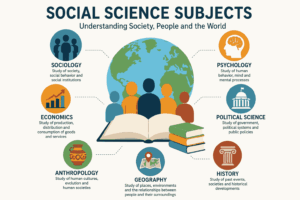
Also Read: Social Science Subjects: A Complete Guide to Understanding Society, Human Behavior, and Modern Life
Frequently Asked Questions (FAQs)
1. What are the main mass communication subjects?
The main mass communication subjects include journalism, public relations, advertising, media studies, communication research, digital media, television production, radio production, film studies, media law, media ethics, and content creation.
2. Are mass communication subjects difficult to study?
Most students find mass communication subjects manageable because they combine theory with practical activities. Success depends on creativity, communication skills, research abilities, and a willingness to learn modern media technologies.
3. What careers can I pursue after studying mass communication subjects?
Graduates can work as journalists, broadcasters, public relations specialists, advertising executives, social media managers, content creators, media researchers, television producers, radio presenters, filmmakers, and digital communication strategists.








+ There are no comments
Add yours