






The 2026 West African Senior School Certificate Examination (WASSCE), organized by the West African Examinations Council, is expected to introduce several important changes in examination methods, registration processes, technology usage, and candidate preparation. Across countries like Nigeria, Ghana, Sierra Leone, Liberia, and The Gambia, WAEC continues to modernize its examination system to improve transparency, reduce malpractice, and align with global educational standards.
For many students, teachers, and parents, one major question remains: How is 2026 WAEC going to look like? This article explores the likely structure, expected innovations, examination trends, subject formats, grading system, preparation methods, and the overall experience candidates should expect in the 2026 WAEC examinations.
Overview of the 2026 WAEC Examination
The 2026 WAEC examination is expected to maintain its role as one of the most important secondary school examinations in West Africa. However, educational experts believe the examination body will continue implementing reforms aimed at making assessments more secure, digital, and competency-based.
Students should expect:
- Increased use of technology
- Stricter anti-malpractice measures
- Improved CBT integration
- Faster result processing
- More practical-based assessments
- Stronger focus on critical thinking
The official WAEC portal can be accessed through WAEC Official Website for updates, registration details, and examination announcements.
Expected Changes in 2026 WAEC Registration Process
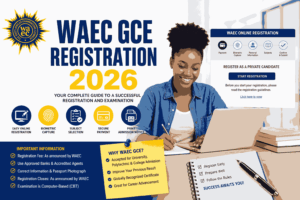
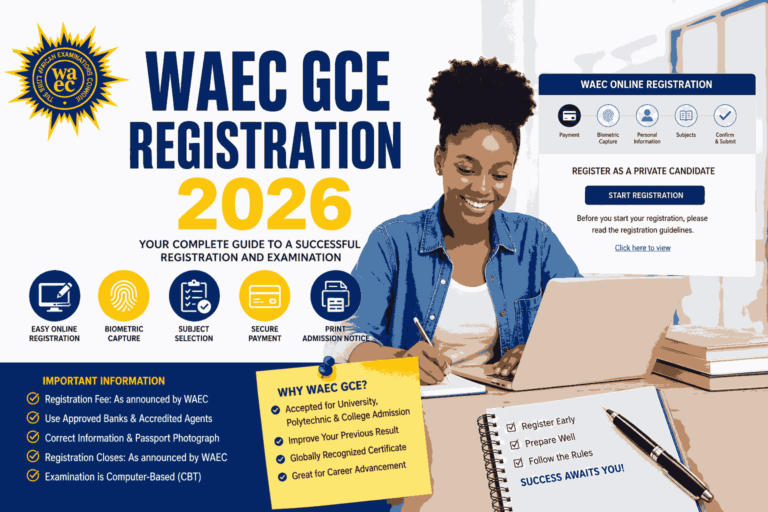
1. Fully Digital Registration
WAEC has gradually shifted toward digital registration systems, and by 2026, the process is expected to become even more streamlined.
Candidates will likely complete:
- Biometric capturing
- Passport uploads
- Subject selection
- Payment verification
- Identity confirmation
through online portals without excessive paperwork.
Schools may also receive upgraded dashboards for easier student management.
2. Improved Biometric Verification
Biometric verification is expected to become stricter in 2026. This aims to eliminate impersonation and examination fraud.
Candidates may be required to verify:
- Fingerprints
- Facial recognition
- Digital signatures
before entering examination halls.
How the 2026 WAEC Exam Format May Look
1. Continued Use of Objective and Essay Questions
The traditional WAEC format will likely remain:
- Multiple-choice questions
- Theory/essay sections
- Practical examinations
However, examiners are expected to increase analytical and application-based questions instead of relying heavily on memorization.
2. Possible Expansion of CBT Examinations
Computer-Based Testing (CBT) has already been introduced in some examinations across Africa. In 2026, WAEC may expand CBT for certain subjects, especially objective papers.
Subjects Likely to Use CBT:
- Mathematics
- English Language objective
- Government
- Economics
- Biology
- Commerce
This modernization could reduce examination leakage and improve grading speed.
3. More Practical and Skill-Based Assessments
Educational systems worldwide are moving toward practical learning. WAEC may include:
- More experiments
- Case studies
- Problem-solving tasks
- Real-world applications
instead of testing only theoretical knowledge.
Technology and Security Measures in 2026 WAEC
1. AI Monitoring and Exam Surveillance
WAEC is expected to strengthen examination monitoring using:
- CCTV cameras
- AI-assisted monitoring
- Digital attendance systems
- Electronic tracking
These technologies can help identify suspicious behavior quickly.
2. Stronger Anti-Examination Malpractice Policies
The examination body may introduce:
- Harsher penalties
- Center blacklisting
- Instant candidate disqualification
- Device detection systems
Students should avoid:
- Bringing phones into halls
- Purchasing leaked questions
- Using unauthorized materials
WAEC has repeatedly warned candidates against examination malpractice through its official communication channels.
Subjects and Curriculum Expectations for 2026 WAEC
1. Updated Curriculum Alignment
WAEC usually aligns its syllabus with national education policies. Students should expect questions based on updated curricula approved by education ministries.
The syllabus may emphasize:
- Digital literacy
- Civic education
- Entrepreneurship
- Environmental awareness
- Communication skills
2. STEM Subjects Could Receive More Attention
Science and technology education continues to grow in importance.
Subjects likely to gain increased emphasis include:
- Physics
- Chemistry
- Biology
- Further Mathematics
- Computer Studies
Governments across West Africa are investing more in STEM education to prepare students for modern careers.
How Difficult Will 2026 WAEC Be?
Many candidates often fear each new WAEC year will become harder. However, WAEC generally maintains balanced standards.
Factors That May Influence Difficulty
1. Analytical Questions
Questions may test deeper understanding instead of direct recall.
2. Strict Timing
CBT-based sections could increase pressure on time management.
3. Reduced Exam Leakage
Stronger security systems may make it difficult for candidates relying on expo or leaked answers.
4. Higher Competition
With increasing student populations, performance competition may become tougher.
Students who study consistently and understand concepts properly are still likely to perform very well.
Expected Grading System for 2026 WAEC
The WAEC grading structure is not expected to change significantly.
Likely Grade Structure
| Grade | Interpretation |
|---|---|
| A1 | Excellent |
| B2 | Very Good |
| B3 | Good |
| C4 | Credit |
| C5 | Credit |
| C6 | Credit |
| D7 | Pass |
| E8 | Pass |
| F9 | Fail |
Credits in core subjects like Mathematics and English Language will likely remain essential for university admission.
How Students Should Prepare for 2026 WAEC
1. Start Early Preparation
Early preparation gives students more confidence and understanding.
Candidates should:
- Create study schedules
- Practice past questions
- Attend tutorials
- Revise consistently
2. Use Official WAEC Syllabus
Students should rely on the official syllabus to avoid studying irrelevant topics.
The syllabus and updates are usually available on WAEC Nigeria Portal
3. Practice CBT Familiarity
Since CBT integration may increase, students should:
- Practice online tests
- Improve typing speed
- Learn computer navigation basics
4. Avoid Examination Malpractice
Malpractice risks:
- Result cancellation
- Arrest
- Future academic problems
- Permanent bans
Proper preparation remains the safest strategy.
Role of Schools and Parents in 2026 WAEC
1. Schools Must Improve Digital Readiness
Schools may need:
- Computer labs
- Stable electricity
- Internet access
- CBT practice environments
2. Parents Should Support Academic Discipline
Parents can assist students by:
- Reducing distractions
- Providing learning materials
- Encouraging consistency
- Monitoring study habits
Strong home support often improves examination performance.
What Students Are Saying About 2026 WAEC Expectations
Many students across West Africa believe the 2026 WAEC examination will focus more on:
- Understanding
- Technology
- Speed
- Accuracy
There is also growing awareness that relying on examination malpractice may no longer work due to advanced monitoring systems.
Students who adapt to modern learning methods are expected to perform better.
Possible Challenges WAEC May Face in 2026
Despite modernization, WAEC could still face challenges such as:
1. Internet and Power Problems
Some rural areas may struggle with CBT implementation.
2. Technical Issues
Computer malfunctions can affect examination flow.
3. Candidate Adaptation
Not all students are familiar with digital examinations.
4. Examination Logistics
Managing millions of candidates across multiple countries remains a huge task.
WAEC may continue improving infrastructure and partnerships to reduce these problems.
Future of WAEC Beyond 2026
Educational analysts believe WAEC may continue evolving toward:
- Full CBT examinations
- Digital certificates
- Faster result release
- AI-powered grading systems
- Online verification platforms
This transformation aligns with global educational trends.
The examination body continues updating its systems through information shared on WAEC International Website
Conclusion
The 2026 WAEC examination is expected to become more modern, technology-driven, and security-focused than previous years. While the core structure of objective, theory, and practical papers may remain, students should prepare for increased CBT integration, stricter anti-malpractice systems, and more analytical questions.
Candidates who begin preparation early, follow the official syllabus, practice consistently, and avoid shortcuts will likely succeed. Schools and parents also have important roles in helping students adapt to changing examination methods.
As WAEC continues modernizing across West Africa, the 2026 examination may represent another major step toward a more transparent, efficient, and globally competitive educational assessment system.
Also Read: Can a 14 Year Old Write WAEC in Nigeria?
Frequently Asked Questions (FAQs)
1. Will 2026 WAEC be computer-based?
Some parts of the examination may increasingly adopt CBT formats, especially objective questions, but theory and practical papers could still remain partly paper-based in some countries.
2. Will WAEC become harder in 2026?
The examination may focus more on understanding and analytical thinking rather than memorization, but students who study properly should still perform well.
3. How can students prepare effectively for 2026 WAEC?
Students should start early, use the official syllabus, practice past questions, improve computer skills, and avoid examination malpractice.






+ There are no comments
Add yours