




How Much Does It Cost To Register A School In Nigeria starting a private school in Nigeria is one of the most profitable and impactful investments in the education sector. Every year, thousands of entrepreneurs, teachers, religious organizations, and investors establish nursery, primary, and secondary schools to meet the growing demand for quality education.
However, one of the first questions many prospective school owners ask is: How much does it cost to register a school in Nigeria?
The answer depends on several factors, including the state where the school will operate, the type of school, government approval fees, facility requirements, and registration costs. While some small schools can begin with a few million naira, larger institutions may require tens of millions of naira before opening their doors to students.
In this comprehensive guide, we explain How Much Does It Cost To Register A School In Nigeria, the registration process, legal requirements, hidden expenses, and everything you need to know before launching your educational institution.
What Does School Registration Mean in Nigeria?
Before discussing How Much Does It Cost To Register A School In Nigeria, it is important to understand what school registration actually means.
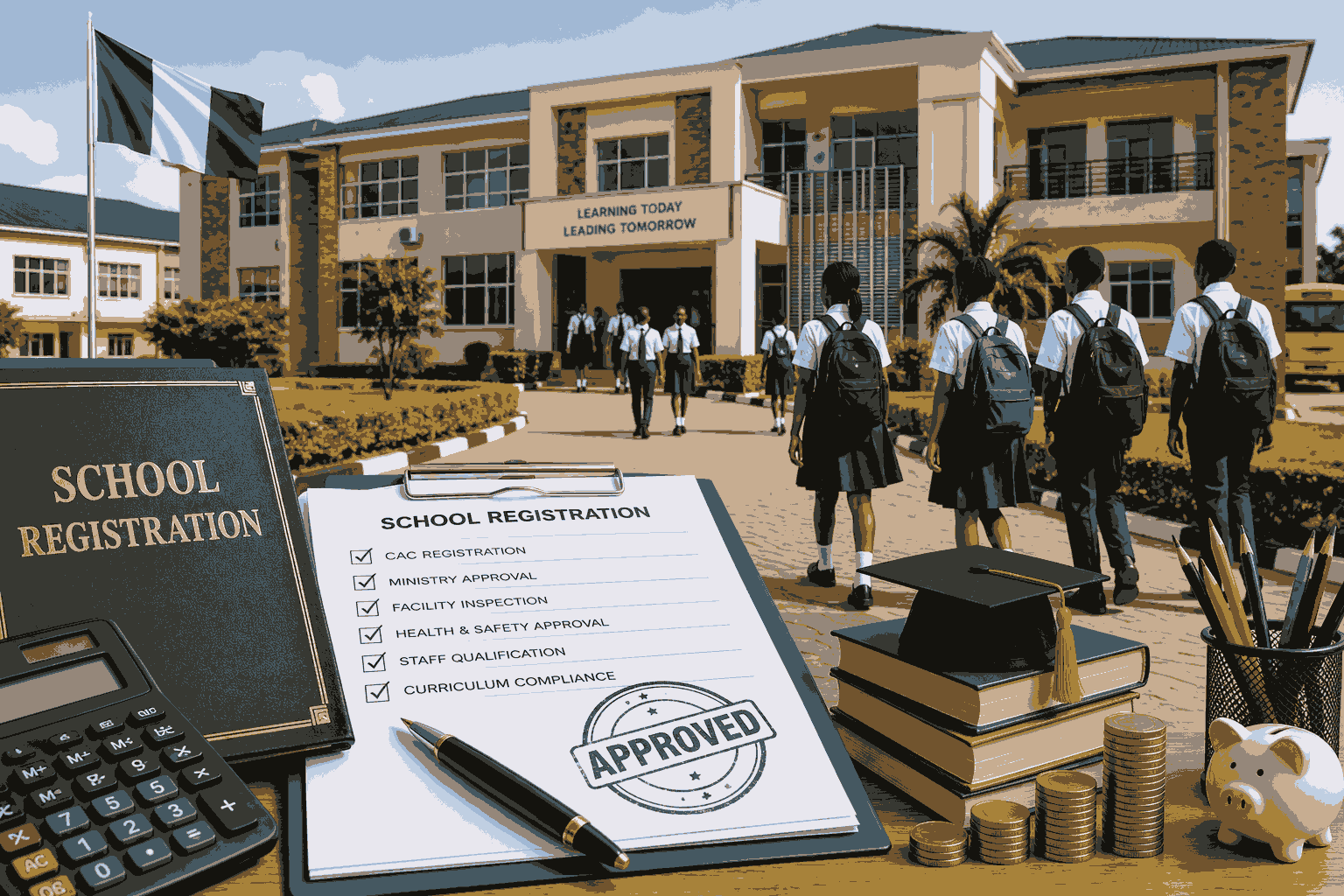
School registration involves obtaining legal recognition from relevant authorities before commencing educational activities. In Nigeria, this typically includes:
- Registering the school with the Corporate Affairs Commission (CAC)
- Obtaining approval from the State Ministry of Education
- Passing facility inspections
- Meeting health and safety requirements
- Employing qualified staff
- Securing operational licenses where necessary
A school that operates without proper registration risks sanctions, closure, or penalties from government authorities.
Cost of CAC Registration for a School in Nigeria
The first official step is registering your school as a legal entity.
Most school owners register either as:
- Business Name
- Limited Liability Company
Recent registration guides indicate that CAC registration fees generally range from approximately ₦45,000 to ₦60,000, although professional service charges may increase the overall amount.
Estimated CAC Registration Costs
| Registration Type | Estimated Cost |
|---|---|
| Name Reservation | ₦1,000 – ₦5,000 |
| Business Name Registration | ₦45,000 – ₦70,000 |
| Limited Liability Company | ₦60,000 – ₦150,000 |
| Professional Agent Charges | ₦20,000 – ₦100,000 |
Many school proprietors prefer a Limited Liability Company because it provides better legal protection and credibility when dealing with parents, banks, and government agencies.
Ministry of Education Registration Fees
After CAC registration, the next major step is obtaining approval from the State Ministry of Education.
The exact amount varies from state to state because each ministry has its own guidelines and fee structure.
Generally, Ministry of Education approval can cost between ₦150,000 and ₦500,000 or more, depending on the location and category of the school.
What These Fees Cover
- Application processing
- Inspection exercises
- Documentation review
- Accreditation assessment
- Provisional approval
- Operational licensing
In major states such as Lagos, Abuja, Rivers, and Ogun, the fees may be significantly higher due to stricter compliance requirements.
Facility Inspection Costs
A crucial aspect of school registration is inspection.
Government officials assess whether your school has:
- Adequate classrooms
- Proper ventilation
- Administrative offices
- Toilets
- Playground facilities
- Safety equipment
- Library facilities
- ICT resources
Secondary schools may additionally require:
- Science laboratories
- Computer laboratories
- Technical workshops
Inspection-related expenses and compliance costs can range from ₦100,000 to ₦500,000 depending on the upgrades needed before approval.
Health and Safety Approval Costs
Most states require schools to satisfy health and safety standards before approval.
You may need:
- Environmental health certification
- Fire service clearance
- Building safety approval
- Waste management compliance
The combined cost can range between ₦50,000 and ₦300,000 depending on the state and facility size.
How Much Does It Cost to Register a Nursery School in Nigeria?
A nursery school generally costs less to register because the requirements are usually less extensive than those for secondary schools.
Estimated Nursery School Registration Budget
| Item | Estimated Cost |
|---|---|
| CAC Registration | ₦45,000 – ₦150,000 |
| Ministry Approval | ₦150,000 – ₦300,000 |
| Inspection Fees | ₦50,000 – ₦200,000 |
| Documentation | ₦20,000 – ₦50,000 |
Total Registration Estimate
₦265,000 – ₦700,000
This estimate excludes building rent, furniture, teaching materials, and staff salaries.
How Much Does It Cost to Register a Primary School in Nigeria?
Primary schools often require larger facilities and more teachers than nursery schools.
Estimated Registration Costs
| Item | Cost |
|---|---|
| CAC Registration | ₦45,000 – ₦150,000 |
| Ministry Approval | ₦200,000 – ₦400,000 |
| Inspections | ₦100,000 – ₦300,000 |
| Documentation | ₦30,000 – ₦100,000 |
Total Registration Estimate
₦375,000 – ₦950,000
Actual figures may vary significantly depending on the state.
How Much Does It Cost to Register a Secondary School in Nigeria?
Secondary schools face stricter regulations.
Government authorities often require:
- Science laboratories
- ICT facilities
- Qualified graduate teachers
- Libraries
- Larger classrooms
Because of these requirements, registration costs are generally higher.
Estimated Costs
| Item | Cost |
|---|---|
| CAC Registration | ₦45,000 – ₦150,000 |
| Ministry Approval | ₦300,000 – ₦500,000+ |
| Safety Clearance | ₦100,000 – ₦300,000 |
| Inspection Fees | ₦100,000 – ₦500,000 |
Total Registration Estimate
₦545,000 – ₦1.45 million
Other Costs Beyond School Registration
Many people focus only on registration fees and forget the expenses involved in setting up the actual school.
Typical startup costs include:
Land or Building
Depending on location, acquiring or leasing a property may cost between ₦500,000 and ₦25 million or more.
Classroom Furniture
Desks, chairs, whiteboards, cabinets, and teacher tables can cost millions of naira for a complete school setup.
Learning Materials
You will need:
- Textbooks
- Workbooks
- Library resources
- Montessori equipment
These can cost several hundred thousand naira or more.
ICT Equipment
Many schools now require:
- Computers
- Printers
- Internet connectivity
- Administrative software
These expenses can exceed ₦1 million.
Staff Salaries
Teachers and non-teaching staff must be paid even before student enrollment becomes substantial.
Salary expenses often represent one of the largest recurring costs.
Step-by-Step Process for Registering a School in Nigeria
Step 1: Choose a School Name
Select a unique and memorable name for your institution.
Step 2: Register With CAC
Register the school through the Corporate Affairs Commission and obtain your incorporation documents.
Step 3: Secure a Suitable Location
Choose a facility that satisfies educational and safety standards.
Step 4: Apply to the Ministry of Education
Submit all required documents and application forms.
Step 5: Undergo Inspection
Government officials inspect the school premises.
Step 6: Obtain Approval
Upon successful inspection, the ministry issues approval for operation.
Step 7: Begin Operations
Recruit staff, enroll students, and commence academic activities.
Factors That Affect School Registration Costs
Several factors influence how much it costs to register a school in Nigeria:
State of Operation
Lagos and Abuja generally have higher costs than many other states.
School Category
Secondary schools cost more than nursery schools.
Facility Size
Larger schools require more infrastructure and inspections.
Approval Requirements
Different ministries enforce different standards.
Professional Assistance
Using consultants or legal professionals increases costs but can speed up the process.
Is School Registration in Nigeria Worth the Cost?
Yes.
Education remains one of Nigeria’s most resilient sectors. The demand for quality private education continues to grow due to increasing population, urbanization, and parental demand for improved learning environments.
A properly registered school enjoys:
- Legal recognition
- Increased public trust
- Access to government programs
- Easier banking relationships
- Better long-term growth opportunities
Although registration requires significant investment, it establishes a strong foundation for future success.
Conclusionon on How Much Does It Cost To Register A School In Nigeria
So, How Much Does It Cost To Register A School In Nigeria?
For most schools, registration and approval costs generally range from ₦250,000 to over ₦1.5 million, depending on the type of school, state requirements, inspections, and licensing procedures. However, when startup expenses such as buildings, furniture, teaching materials, and staff salaries are included, the total investment can range from a few million naira to well over ₦100 million for large institutions.
Before starting a school, ensure you understand your state’s regulations, prepare adequate funding, and complete all legal requirements. Proper registration not only keeps your school compliant with the law but also builds confidence among parents and stakeholders.
Also Read: Online Tutor Vacancies: Complete Guide to Finding High-Paying Online Tutoring Jobs in 2026
Frequently Asked Questions
1. Can I operate a school without registering it in Nigeria?
No. Every private school must be registered with the CAC and approved by the relevant State Ministry of Education before legally operating.
2. How long does school registration take in Nigeria?
CAC registration can take a few days to a few weeks, while Ministry of Education approval may take several weeks or months depending on inspections and state requirements.
3. What is the minimum amount needed to start a private school in Nigeria?
A very small nursery school may start with a few million naira, while larger primary and secondary schools often require substantially more capital for facilities, staffing, and regulatory compliance.





+ There are no comments
Add yours