






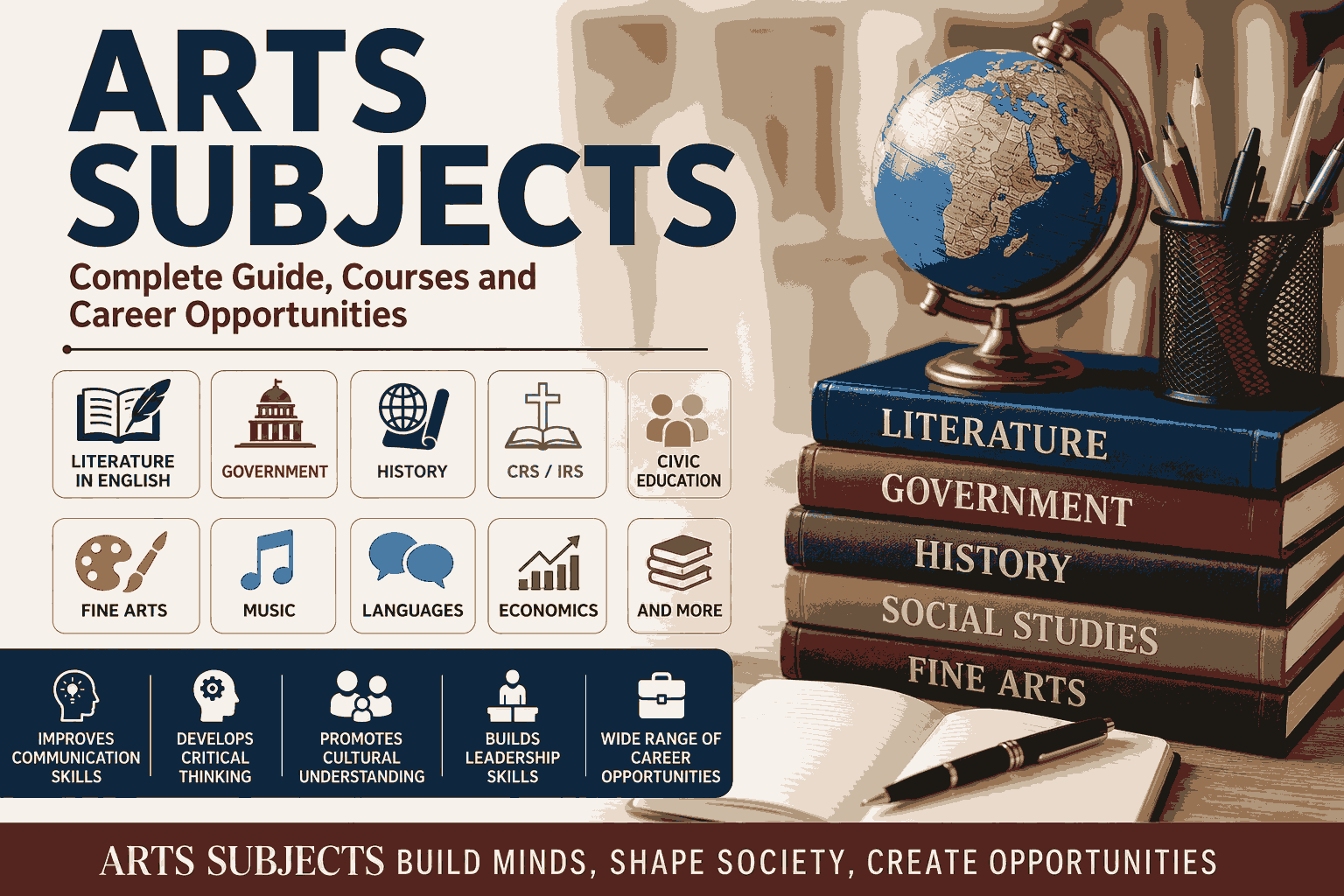
Arts Subjects are among the most popular academic disciplines studied in secondary schools and universities around the world. Arts subjects focus on human society, culture, language, history, communication, creativity, and critical thinking. Students who choose Arts Subjects develop valuable skills in writing, analysis, research, communication, leadership, and problem-solving.
In Nigeria and many other countries, Arts Subjects play an important role in preparing students for careers in law, journalism, public administration, international relations, education, media, politics, and many other professions. Despite the growing interest in science and technology, Arts Subjects remain highly relevant because societies need professionals who understand human behavior, culture, governance, and communication.
This comprehensive guide explains everything you need to know about Arts Subjects, including examples, benefits, career opportunities, university courses, admission requirements, and how to choose the right arts subject combination for your future goals.
What Are Arts Subjects?
Arts Subjects are academic disciplines that focus on human society, language, culture, history, literature, communication, religion, government, and creative expression.
Unlike science subjects that emphasize experiments and calculations, Arts Subjects concentrate on understanding people, ideas, values, and social systems.
Students who study Arts Subjects learn how to:
- Communicate effectively
- Analyze information
- Conduct research
- Think critically
- Understand cultures and societies
- Develop leadership skills
- Solve social and organizational problems
These skills are highly valued by employers across various industries.
List of Common Arts Subjects
Many schools offer a wide range of Arts Subjects. The exact subjects may vary depending on the educational system and curriculum.
Core Arts Subjects
Literature in English
Literature exposes students to novels, poetry, drama, and literary criticism. It develops reading, interpretation, and communication skills.
Government
Government teaches students about political systems, constitutions, democracy, public administration, and civic responsibilities.
History
History focuses on past events, civilizations, national development, and global historical changes.
Christian Religious Studies (CRS)
CRS explores biblical teachings, Christian values, ethics, and religious history.
Islamic Religious Studies (IRS)
IRS teaches Islamic principles, teachings of the Quran, Islamic law, and religious practices.
Civic Education
Civic Education helps students understand citizenship, national values, human rights, and responsibilities.
Fine Arts
Fine Arts involves drawing, painting, sculpture, design, and creative expression.
Music
Music develops artistic talent, performance skills, and understanding of musical theory.
Languages
Many students studying Arts Subjects also take language courses such as:
- English Language
- French
- Arabic
- Yoruba
- Hausa
- Igbo
Why Arts Subjects Are Important
Many people underestimate the value of Arts Subjects, but they are essential for national development and personal growth.
Improves Communication Skills
One of the biggest advantages of studying Arts Subjects is improved communication. Students learn how to write, speak, and present ideas effectively.
Develops Critical Thinking
Arts education encourages students to evaluate information, analyze situations, and make informed decisions.
Promotes Cultural Understanding
Through literature, history, and religious studies, students gain a deeper understanding of different cultures and traditions.
Builds Leadership Skills
Many leaders, politicians, lawyers, and administrators began their educational journey through Arts Subjects.
Supports Democracy and Governance
Government and Civic Education help students understand democratic processes and responsible citizenship.
Best Arts Subjects for Secondary School Students
Choosing the right Arts Subjects can significantly affect future academic and career opportunities.
The most recommended combination includes:
| Subject | Importance |
|---|---|
| English Language | Compulsory |
| Literature in English | Highly Recommended |
| Government | Essential for Social Sciences and Law |
| History | Valuable for Humanities |
| CRS/IRS | Important in many institutions |
| Civic Education | National Requirement |
| Economics | Useful for Business and Social Sciences |
This combination provides flexibility for various university programs.
Arts Subjects Required for Law
Many students interested in becoming lawyers ask about the best Arts Subjects.
Commonly required subjects include:
- English Language
- Literature in English
- Government
- CRS or IRS
- History
Law is one of the most popular career paths for students studying Arts Subjects because it combines communication, reasoning, and analytical skills.
Arts Subjects Required for Mass Communication
Mass Communication remains one of the most sought-after university courses.
Recommended Arts Subjects include:
- English Language
- Literature in English
- Government
- Economics
- Civic Education
Students studying these Arts Subjects gain strong writing and communication skills needed in journalism and media careers.
University Courses for Arts Students
Students who study Arts Subjects can pursue numerous degree programs.
Law
One of the most prestigious options for arts students.
Mass Communication
Ideal for journalism, broadcasting, and digital media careers.
International Relations
Focuses on diplomacy, global affairs, and international cooperation.
Political Science
Examines politics, governance, and public policy.
History and International Studies
Provides knowledge about historical developments and global issues.
English and Literary Studies
Develops expertise in language, literature, and communication.
Theatre Arts
Combines performance, creativity, and entertainment.
Linguistics
Studies language structure, communication, and translation.
Public Administration
Prepares students for government and administrative roles.
Philosophy
Explores ethics, logic, and human thought.
Career Opportunities for Arts Students
A common misconception is that Arts Subjects offer limited career opportunities. In reality, arts graduates work in numerous industries.
Lawyer
Lawyers represent clients, provide legal advice, and handle legal matters.
Journalist
Journalists gather, write, and report news stories.
Teacher
Arts graduates often become educators in schools and universities.
Public Relations Officer
PR professionals manage communication between organizations and the public.
Civil Servant
Many government positions are suitable for arts graduates.
Diplomat
Diplomats represent their countries internationally.
Content Writer
The digital economy has increased demand for skilled writers.
Human Resources Specialist
HR professionals recruit and manage employees.
Political Analyst
Political analysts study political developments and public policy.
Media Presenter
Television and radio presenters often have arts backgrounds.
Skills Developed Through Arts Subjects
Students studying Arts Subjects acquire transferable skills useful in nearly every profession.
Communication Skills
Strong written and verbal communication.
Research Skills
Ability to gather and evaluate information.
Analytical Thinking
Understanding complex ideas and situations.
Creativity
Generating innovative solutions and ideas.
Leadership
Managing people and projects effectively.
Problem-Solving
Addressing challenges through logical reasoning.
Challenges Faced by Arts Students
Although Arts Subjects offer many benefits, students may face certain challenges.
Misconceptions About Career Prospects
Some people incorrectly believe arts students have fewer opportunities.
Competition
Popular courses like Law and Mass Communication can be highly competitive.
Rapid Industry Changes
Media and communication industries continue evolving with technology.
However, students who continuously develop skills remain highly employable.
How to Excel in Arts Subjects
Students can improve performance in Arts Subjects through effective study habits.
Read Regularly
Books, newspapers, and academic materials improve knowledge and vocabulary.
Practice Writing
Frequent writing strengthens communication skills.
Participate in Discussions
Debates and classroom discussions enhance critical thinking.
Study Past Questions
Reviewing previous examination questions helps with preparation.
Improve Research Skills
Learning how to find reliable information improves academic performance.
Future of Arts Subjects
The future of Arts Subjects remains bright. While technology continues transforming industries, organizations still need professionals who can communicate, lead, negotiate, and understand human behavior.
Emerging opportunities include:
- Digital Marketing
- Content Creation
- Social Media Management
- Public Relations
- International Affairs
- Creative Writing
- Online Education
- Corporate Communications
As businesses and governments become more interconnected globally, demand for graduates with strong communication and analytical skills continues to grow.
Conclusion
Arts Subjects remain a vital part of education and career development. They provide students with communication, research, leadership, analytical, and critical-thinking skills that are valuable in numerous professions. Whether your goal is to become a lawyer, journalist, diplomat, teacher, public relations specialist, or civil servant, Arts Subjects offer a strong foundation for success.
Rather than viewing arts education as a secondary option, students should recognize its importance in shaping society, preserving culture, promoting effective communication, and developing future leaders. By choosing the right Arts Subjects and building relevant skills, students can unlock countless educational and career opportunities.
Also Read: Subject Combination for Business Administration in Nigeria (2026 Guide): WAEC, NECO, JAMB
Frequently Asked Questions (FAQs)
What are Arts Subjects?
Arts Subjects are academic disciplines that focus on language, literature, history, government, religion, culture, communication, and human society.
Which Arts Subject is best for Law?
Literature in English, Government, History, CRS/IRS, and English Language are among the most important arts subjects for students interested in studying Law.
Can Arts Students Get Good Jobs?
Yes. Arts students can work as lawyers, journalists, diplomats, teachers, public relations officers, civil servants, content writers, human resources specialists, and many other professionals.







+ There are no comments
Add yours